How to Evaluate Firearm Fit, Controls and Intended Use: What to Check First
A firearm is not a choice simply because it is popular, powerful or well reviewed. The useful question is whether the person using it can handle its controls safely maintain it correctly and apply it to a clearly defined purpose. Checking these points before buying or going to the range can reveal confusing operation and maintenance problems early.
Start, with the person, not the product
Fit begins with control, not appearance. A grip that is too large can make it difficult to reach the trigger or other controls without shifting the hand. A stock that is too long may force a shoulder position. If the user must stretch, twist loosen the grip. Change stance to operate the firearm consider another model or configuration.
For a handgun check whether the shooting hand can maintain a grip while the trigger finger rests outside the trigger guard. The finger should reach the trigger when the sights are on a target and the decision to fire has been made. If reaching it requires the hand to rotate or the wrist to bend the fit may be unsuitable.
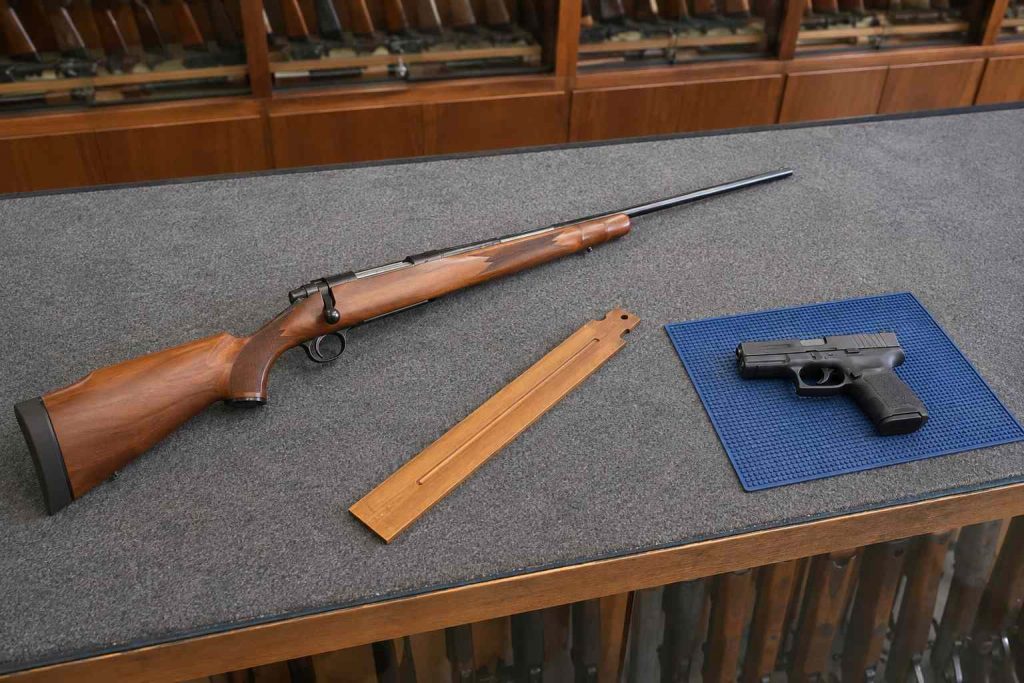
Rifle fit also depends on length of pull, stock shape comb height and balance. These features affect how naturally the rifle comes to the shoulder and how consistently the sights or optic align. Clothing layers can change comfort so do not rely on one handling session. Persistent difficulty can encourage habits, flinching or hurried manipulation.
Test every control with a firearm
Before examining controls confirm that the firearm is unloaded according to the manufacturers instructions. Keep the muzzle pointed in a direction remove ammunition from the area and use a competent instructor or qualified dealer if any step is unclear. An unloaded check reduces risk. Does not replace the fundamental rules of safe handling.
Identify the safety or other firing-control system, magazine release, slide or bolt controls, takedown points and adjustment features. Layouts vary by design. The user should be able to identify each control without guessing and operate it while keeping the muzzle pointed safely. The trigger finger outside the trigger guard.
Do not ignore a control that feels sticks moves inconsistently or requires force. The same applies to a magazine that fails to seat or release normally a slide or bolt that does not move as expected or a safety that changes position without input. Stop the inspection. Consult the manufacturers instructions or a qualified gunsmith. Do not force a control. Attempt a repair.
A clear manual of arms is part of firearm selection. If the user cannot explain what each control does and when it should be used the firearm is not ready for fire.
Match the firearm to its intended use
Intended use should be specific enough to guide a decision. Range practice, lawful hunting, competition, collection and home storage may involve priorities. All require safe handling, secure storage and regular maintenance. The purpose should determine the features being evaluated, not a desire for the powerful option.
For range use manageable recoil, fit, reliable sights and straightforward controls may matter more than maximum capacity or compact dimensions. For hunting consider whether the firearm is appropriate for the game and conditions whether the user can carry and operate it safely and whether local requirements are satisfied. Requirements can change, so consult guidance before hunting or transporting a firearm.
An used firearm still needs a storage and maintenance plan. Consider where it will be secured who could access it how it will be. Whether the owner can obtain cleaning information and replacement parts. A firearm that cannot be stored safely or maintained responsibly is not practical regardless of its specifications. Avoid buying for a role; start with the use that is real, lawful and likely.
Look for maintenance warning signs
Before every range session perform a condition check with the firearm unloaded and pointed in a direction. Look for rust, damaged or missing parts, cracked grips or stocks loose sights, obstructed barrels and contamination around moving components. Inspect ammunition separately for corrosion, dents, damaged primers or other visible defects. Set cartridges aside. Follow appropriate disposal guidance rather than attempting to use them.
Some symptoms call for attention: a change in trigger feel, unusual resistance, a component, a cracked structural part, a bulged or obstructed barrel repeated failures to feed or extract or unexplained damage. End the session than continuing to see whether the issue disappears. Unload the firearm safely separate it from ammunition. Consult the manufacturer, a gunsmith or another appropriately trained professional.
Cleaning is not a cure for every problem. Excess lubricant can attract debris while incorrect disassembly can damage parts or create a condition. Follow the manual use suitable products and stop if a maintenance step is unclear.
Use a decision check before buying or firing
A written check can prevent a choice:
– Can the intended user hold the firearm securely and reach its controls without shifting the grip or putting a finger inside the trigger guard?
– Can the user identify the safety system and explain the basic operating sequence without guessing?
– Does the firearm suit a specific lawful purpose and the users ability to store, transport and maintain it?
– Are there signs of damage, obstruction, looseness, unusual resistance or unreliable operation?
– Has the user reviewed the current manufacturers instructions and applicable official rules?
– If any answer is uncertain has a qualified instructor, dealer or gunsmith been consulted before fire?
This check does not replace instruction, careful inspection or local legal advice. Laws and regulations can change,. These questions help distinguish a decision from a purchase based mainly on appearance, reputation or pressure.
Good firearm selection is less, about finding an model than finding a responsible match. When fit, controls, purpose and condition all make sense safe handling is more realistic to maintain. When one does not pause before buying, loading or firing.